

As a congregation called to love our neighbors and seek justice, we recognize April as a season of awareness and action. Two important national observances this month invite us to reflect on health disparities that affect our community — and to ask what our faith compels us to do about them.
National Minority Health Month
National Minority Health Month (NMHM) 2026 is observed in April to raise awareness of health disparities affecting racial and ethnic minority populations and to promote health equity across the United States. NMHM was founded in 1998 by the National Minority Quality Forum and officially recognized by the U.S. Congress in 2002 as a national public health observance.
The initiative builds on decades of minority health advocacy, including early efforts by leaders like Booker T. Washington and the landmark 1985 Heckler Report — a federal study that documented racial and ethnic health disparities and issued a national call to action that still echoes today.
Black Maternal Health Week — April 11–17
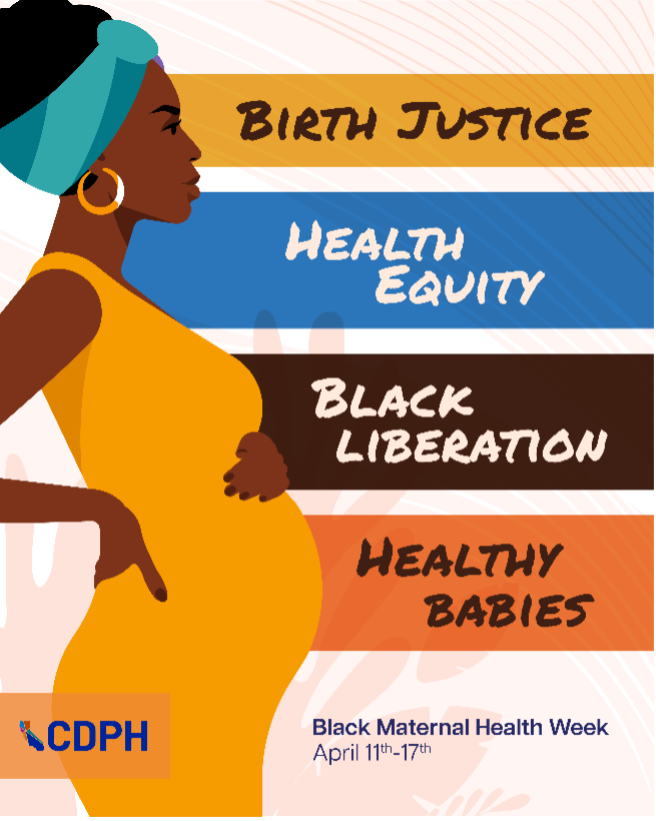 One area where inequities are especially urgent is Black maternal health. Black women in the United States are two to three times more likely to die from pregnancy-related causes than white women — a disparity that persists regardless of income or education level. This is not inevitable. It is a justice issue.
Black women are 2–3 times more likely to die from pregnancy-related causes than white women in the U.S., according to the CDC — a disparity that holds across income and education levels.
Black Maternal Health Week (#BMHW26), observed every April 11–17, is a week-long campaign founded and led by BMMA, Inc. (Black Mamas Matter Alliance) to build awareness, foster activism, and amplify the voices and lived experiences of Black Mamas and birthing people. This year's theme — "Rooted in Justice & Joy" — marks the 10-year anniversary of the movement, celebrating the strength and resilience of Black-led perinatal, maternal, and reproductive health organizations that have cultivated change and healing across communities.
The week begins on April 11th to align with International Day for Maternal Health and Rights, joining dozens of global organizations in calling for the elimination of maternal mortality worldwide. The conversations and activities throughout the week center the values of birth justice and reproductive justice movements — acknowledging the enduring legacies of systemic harm while calling for a future rooted in restoration, justice, and joy.
How you can respond this April
- Pray — for Black mothers, birthing families, and the advocates working for their care
- Learn — visit blackmamasmatter.org to explore resources and this year's events
- Share — use #BMHW26 to amplify awareness on social media this week
- Give — consider supporting a local maternal health organization or doula fund in our community
- Show up — watch for upcoming events from our Health & Wellness Ministry this month