Health Education Resources

- Details
- Category: Health Education Resources
Cataract Awareness Month was established in 1908 when a community of doctors realized that 30% of cases of blindness in children were highly preventable or treatable, but no actions were being taken. The U.S. Centers for Disease Control and Prevention estimates that around 30 million Americans suffer from cataracts. This figure is projected to grow to 39 million by 2032. This is alarming because cataracts are highly treatable, yet people continue to suffer through them due to a lack of knowledg
Cataract is a clouding of the eye’s lens that blocks or changes the passage of light into the eye.
According to the National Eye Institute, although there may be no early symptoms, patients may begin to notice:
- cloudy or blurry vision
- colors that look faded
- difficulty seeing at night
- lamps, sunlight, or headlights appearing too bright
- a halo around lights
- seeing double (this sometimes goes away as the cataract gets bigger)
- frequent changes to the prescription of eyeglasses or contact lenses
The goal of the awareness campaign promotes information about the eye condition that is the leading cause of blindness in the U.S. While this is a scary fact, fret not because cataracts are treatable with a simple surgery procedure, which has a 95% success rate. This common eye condition mostly affects people over 40, developing slowly over time. However, severe vision impairment doesn’t usually happen until 60 or above. The causes for cataracts can range from diabetes, long-term eye diseases, and eye injury/inflammation, to factors like intense heat, hereditary influences, smoking, intake of certain oral steroids, and so forth.
Unlike many of the other major eye diseases, such as glaucoma or diabetes-related eye disease, cataracts can be easily and painlessly treated by surgery to remove and replace the eye’s lens, restoring sight for most patients. If you have any concerns about your vision, be sure to work with an eye care professional to understand your symptoms and diagnosis and the best available treatment options.
Sources:
- Centers for Disease Control and Prevention
- National Eye Institute
- National Today
- Prevent Blindness
- Details
- Category: Health Education Resources
Since its inception in 1949, Mental Health Awareness Month has designated as time to focus on the challenges faced by millions of Americans living with mental health conditions. Throughout May, people throughout the country will actively participate in this national movement, dedicated to eradicating stigma, extending support, fostering public education, and advocating for policies that prioritize the well-being of individuals and families affected by mental illness. Mental Health Awareness Month provides a perfect opportunity to shine a spotlight on mental health resources, local programs and initiatives, as well as helpful information that is available for specific populations such as caregivers, youth and young adults and underrepresented communities.
Trying to tell the difference between what expected behaviors are and what might be signs of a mental illness isn’t always easy. There’s no easy test that can let someone know if there is mental illness or if actions and thoughts might be typical behaviors of a person or the result of a physical illness.
 Each illness has its own symptoms, but common signs of mental illness in adults and adolescents can include the following:
- Excessive worrying or fear
- Feeling excessively sad or low
- Confused thinking or problems concentrating and learning
- Extreme mood changes, including uncontrollable “highs” or feelings of euphoria
- Prolonged or strong feelings of irritability or anger
- Avoiding friends and social activities
- Difficulties understanding or relating to other people
- Changes in sleeping habits or feeling tired and low energy
- Changes in eating habits such as increased hunger or lack of appetite
- Changes in sex drive
- Difficulty perceiving reality (delusions or hallucinations, in which a person experiences and senses things that don’t exist in objective reality)
- Inability to perceive changes in one’s own feelings, behavior, or personality
- Overuse of substances like alcohol or drugs
- Multiple physical ailments without obvious causes (such as headaches, stomach aches, vague and ongoing “aches and pains”)
- Thinking about suicide
- Inability to carry out daily activities or handle daily problems and stress
- An intense fear of weight gain or concern with appearance
Mental health conditions can also begin to develop in young children. Because they’re still learning how to identify and talk about thoughts and emotions, their most obvious symptoms are behavioral. Symptoms in children may include the following:
- Changes in school performance
- Excessive worry or anxiety, for instance fighting to avoid bed or school
- Hyperactive behavior
- Frequent nightmares
- Frequent disobedience or aggression
- Frequent temper tantrums
Where To Get Help
Don’t be afraid to reach out if you or someone you know needs help. Learning all you can about mental health is an important first step.
Reach out to your health insurance, primary care doctor or state/county mental health authority for more resources.
Contact the NAMI HelpLine to find out what services and supports are available in your community.
If you or someone you know is struggling or in crisis, help is available. Call or text 988 or chat 988lifeline.org to reach the 988 Suicide & Crisis Lifeline.
- Details
- Category: Health Education Resources
 The origin of National Minority Health Month was the 1915 establishment of National Negro Health Week by Booker T. Washington. In 2002, National Minority Health Month received support from the U.S. Congress with a concurrent resolution (H. Con. Res. 388) that “a National Minority Health and Health Disparities Month should be established to promote educational efforts on the health problems currently facing minorities and other populations experiencing health disparities.” The resolution encouraged “all health organizations and Americans to conduct appropriate programs and activities to promote healthfulness in minority and other communities experiencing health disparities.
National Minority Health Month is an inclusive initiative that addresses the health needs of people of color. The goal is to strengthen the capacity of local communities to eliminate the disproportionate burden of premature death and preventable illness in minority populations through prevention, early detection, and control of disease complications. The desired outcomes of this annual campaign are to:
- Build awareness about the disproportionate burden of premature death and illness in people from racial and ethnic minority groups.
- Encourage action through health education, early detection, and control of disease complications.
This year’s theme is, Be the Source for Better Health: Improving Health Outcomes Through Our Cultures, Communities, and Connections.
Source: https://www.nimhd.nih.gov/

- Details
- Category: Health Education Resources
February is American Heart Month, a time when all people—especially women—are encouraged to focus on their cardiovascular health.
Heart disease is the leading cause of death for people of most racial and ethnic groups in the United States, including those in the African American, American Indian, Alaska Native, and Hispanic communities.
Every year, Americans suffer more than 1.5 million heart attacks and strokes. Nearly 44% of African American men and 48% of African American women have some form of cardiovascular disease that includes heart disease and stroke. But you can reduce your risk and improve your heart health by following the ABCS:
- A – Take aspirin as directed by your health care provider.
- B – Control your blood pressure.
- C – Manage your cholesterol.
- S – Don’t smoke.
What do I need to know about high blood pressure?
High blood pressure is the leading cause of heart attack and stroke in the United States. About 2 out of every 5 African American adults have high blood pressure, and less than half of them have it under control.
How is blood pressure measured?
Two numbers (e.g., 140/90) help determine blood pressure. The first number measures systolic pressure, which is the pressure in the blood vessels when the heart beats. The second number measures diastolic pressure, which is the pressure in the blood vessels when the heart rests between beats. If the first number is 140 or higher, or the second number is 90 or higher then you have high blood pressure and should talk to your health care provider.
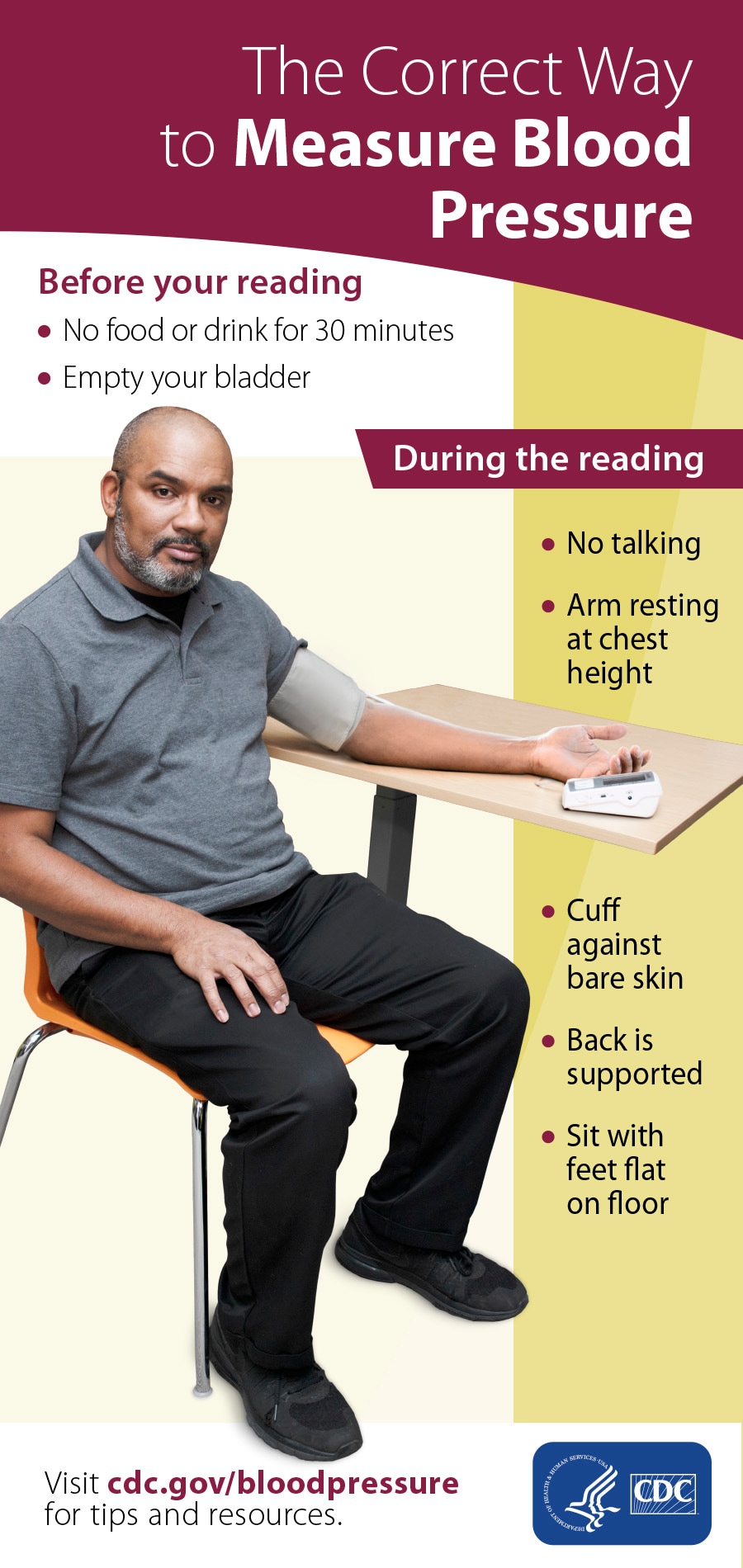
When and how should I check my blood pressure readings?
Check your blood pressure readings on a regular basis, even if you feel fine. Generally, people with high blood pressure have no symptoms. You can check your blood pressure readings at home, at a pharmacy, and at a doctor’s office.
How can I control my blood pressure?
Make control your goal! Work with your health care provider to develop a plan for managing your blood pressure and follow their guidelines, which may include:
- Eat a healthy diet. Eat more fruits and vegetables and choose foods low in sodium. African Americans as well as adults aged 51 years and older and people with high blood pressure, diabetes, or chronic kidney disease should consume only 1,500 mg of sodium per day.
- Get moving. Staying physically active will help you control your weight and strengthen your heart. Try walking for 10 minutes, 3 times a day, at least 5 days a week. This will give you a total of 150 minutes of moderate-intensity activity.
- Take your medications. If you have high blood pressure, your health care provider may give you medicine to help control it. It’s important to follow your doctor’s instructions when taking the medication. Tell your health care provider if the medicine makes you feel bad. Your doctor can talk with you about different ways to reduce side effects or recommend another medicine that may have fewer side effects.
Your doctor is not the only health care provider that can help you follow the ABCS. Nurses, pharmacists, community health workers, health advocates/navigators, and other providers can work with you and your doctor to help you achieve your health goals.
Heart disease is the No. 1 killer for all U.S. adults, and stroke is the No. 5 killer and a leading cause of disability. As frightening as those statistics are, the risks of getting those diseases are even higher for Black people. Historical and systemic factors play a major role in these statistics. Among them are adverse social determinants of health, the conditions in which a person is born and lives. The determinants include lack of access to health care and healthy foods, and other societal issues.
The good news is Black people in the U.S. can improve their odds of preventing and beating these diseases by understanding the risks and taking simple steps to address them.
It is important to have a checkup and work with a health care professional on your specific risk factors and the things that you need to do to take care of your health.
Helpful resources: